16:00 -> 17:00 CEST | 10:00 AM -> 11:00 AM EDT
Online
·
Free 🥳
Navigating complexity – self-managed vs. managed Axoniq
Self-managed or managed Axon Server? Join Maxima and Axoniq experts for a practical framework on operations, compliance, and where your engineers' time goes.
Details
More teams are adopting event sourcing, and Axon Server is designed to be straightforward to operate. It runs as a single binary, requires minimal configuration, and many organizations successfully self-manage it in production.
The question isn't whether you can run Axoniq yourself. It's whether that's where your engineering organization creates the most value. Every hour spent provisioning clusters, applying patches, or managing upgrades is an hour not spent shipping features your customers actually see.
This isn't just an engineering trade-off, it's a business one. Faster time to market, higher reliability, and security built in from the start ("shift left") are outcomes that depend on where your teams focus their energy.
For some organizations, self-managing is the right choice. For others, especially those in regulated industries with demanding uptime and compliance requirements, a managed service delivers economies of scale that are hard to replicate in-house: one specialized team operating Axon Server and its surrounding applications across many environments, at a lower total cost than each organization building that expertise alone.
In this 45-minute session, Patrick Jamal of Maxima and Mitchell Herrijgers of Axoniq will compare both approaches, explain why Axon Server is purpose-built for event-driven systems rather than a general-purpose database, explore the operational realities of running it in production, and show how a managed service translates into measurable business outcomes: faster delivery, stronger compliance posture, and predictable long-term costs.
What you'll take away:
A practical framework for deciding between self-managed and managed operations in business terms, not just technical ones.
Why Axon Server is built for event-driven workloads and scales beyond general-purpose databases.
What operating Axoniq in production actually requires, and what that means for time to market.
What Maxima manages, from provisioning and upgrades to monitoring and 24/7 incident response, and the economies of scale behind it.
How shift-left security and managed operations support compliance and audit readiness while reducing operational burden.
Built for CTOs, VPs of Engineering, engineering managers, project leads, and technology decision-makers in regulated industries.
Registration
hosts
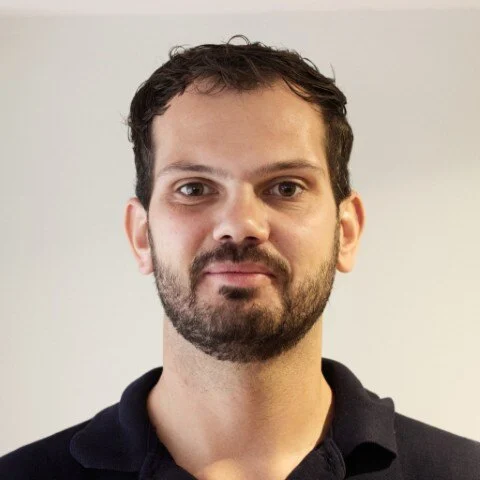
Mitchell Herrijgers
Lead developer - Axoniq platform
Mitchell is a software craftsman, a passionate coder, and eager to learn. He likes complex challenges and he doesn't get discouraged easily. He is interested in the following topics: Kotlin/Java, Event-Sourcing / CQRS / Axon Framework, Cloud/AWS/Infrastructure as Code, and performance tuning. After his study, in Computer Science at the Rotterdam University of Applied Sciences, he worked as a software engineer at ING Bank, Codecentric, and the Port of Rotterdam.

Patrick Jamal
CEO of Maxima Consulting,
Patrick Jamal is the CEO of Maxima Consulting, a global technology consulting firm delivering specialized cloud, and digital transformation solutions from Day 0 through Day 1 to Day 2 operations. With extensive leadership experience driving enterprise technology strategy, Patrick works closely with organizations to scale infrastructure, optimize operations, and leverage high-impact cloud and data technologies.
" height="300px" id="PUlF9PxPI" transform="translate(146 0)" width="300px"/><path d="M 0 103.917 L 36.942 1.41 L 61.335 1.41 L 98.136 103.917 L 76.281 103.917 L 66.834 76.845 L 22.701 76.845 L 12.831 103.917 Z M 26.79 65.424 L 62.886 65.424 L 45.12 14.523 Z M 171.284 103.917 L 143.789 63.732 L 114.743 103.917 L 99.938 103.917 L 136.598 53.016 L 101.348 1.41 L 126.164 1.41 L 151.826 38.916 L 178.757 1.41 L 193.562 1.41 L 159.017 49.632 L 196.1 103.917 Z M 297.837 52.734 C 297.837 82.908 280.353 105.468 249.051 105.468 C 217.608 105.468 200.265 82.908 200.265 52.734 C 200.265 22.419 217.608 0 249.051 0 C 280.353 0 297.837 22.419 297.837 52.734 Z M 221.274 52.734 C 221.274 72.897 228.465 93.483 249.051 93.483 C 269.637 93.483 276.828 72.897 276.828 52.734 C 276.828 32.43 269.637 11.985 249.051 11.985 C 228.465 11.985 221.274 32.43 221.274 52.734 Z M 405.589 1.41 L 405.589 103.917 L 382.042 103.917 L 333.256 18.471 L 334.243 103.917 L 314.362 103.917 L 314.362 1.41 L 337.909 1.41 L 386.695 86.715 L 385.708 1.41 Z M 430.77 103.917 L 430.77 1.41 L 450.651 1.41 L 450.651 103.917 Z M 573.246 91.932 L 573.246 105.468 L 516 105.468 C 485.544 105.468 468.06 82.344 468.06 52.311 C 468.06 22.842 484.275 0 516.564 0 C 547.02 0 565.491 21.573 565.491 51.747 C 565.491 69.09 557.877 85.305 545.187 95.034 C 554.352 93.201 563.376 91.932 573.246 91.932 Z M 489.069 52.17 C 489.069 75.153 496.965 94.188 516.564 94.188 C 537.432 94.188 544.482 73.038 544.482 52.311 C 544.482 28.764 535.599 11.985 516.564 11.985 C 497.106 11.985 489.069 30.738 489.069 52.17 Z" fill="rgb(0, 0, 0)" height="105.46799999999996px" id="g7P19tPZB" transform="translate(8.294 399.083)" width="573.2455397949218px"/></svg>)